Quiet goth hobbies for slow, dark evenings
The best quiet goth hobbies are slow, hands-on and a little old-fashioned. Think of coloring gothic line art by lamplight, reading the Victorian horror classics, writing letters with a dip pen, pressing dark flowers, sketching old architecture and walking through historic garden cemeteries. None of them needs a screen, and most of them are better at night anyway. Researchers who study leisure argue that hobbies can affect wellbeing through many small routes at once (Fancourt et al., 2021), and a slow hobby that suits your taste is probably the easiest kind to stick with.
Coloring gothic line art by lamplight
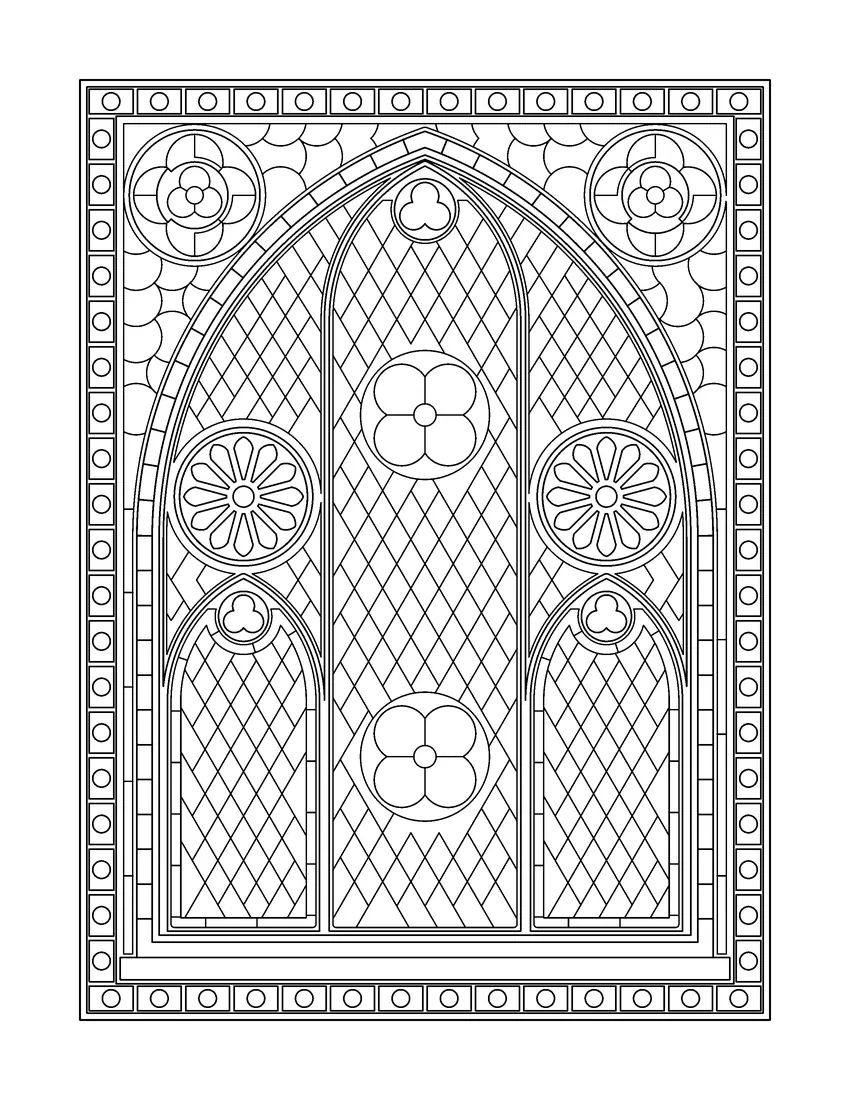
Coloring needs the least setting up of anything here: a printed page, a handful of pencils and a lamp, and you can stop halfway through a pane. Rose windows, skulls crowned with roses and ravens on bare branches all have intricate line work that rewards slow attention, and dark palettes look rich under warm light.
In one study of 160 students, four quite different kinds of coloring all left people a bit less anxious (Ashlock et al., 2018), so the subject doesn't seem to matter much, and a page of cathedral tracery is as good a choice as florals if that's what you'd rather look at. The guide to gothic coloring pages for adults covers palettes that keep dark pages from turning muddy.
Real candles and loose paper on the same table need some care. The National Fire Protection Association's candle safety guidance suggests keeping candles at least a foot from anything that can burn and blowing them out before you leave the room. Plenty of people use a battery candle with a warm flicker for the mood and keep a proper reading lamp on the page.
Reading the gothic classics
Many of the books that built the genre are in the public domain and free to read. Mary Shelley's Frankenstein and Bram Stoker's Dracula are both on Project Gutenberg, along with plenty of Poe, Le Fanu and Radcliffe. Reading them on paper, or printed out, keeps the evening screen-free.
Most of them work a chapter at a time, and they read aloud well. Dracula is told in letters and diary entries, so it breaks naturally into short sittings.
Letter writing with a dip pen
A dip pen, a bottle of black or oxblood ink and some heavy paper turn a note to a friend into a small ritual. Wax seals are cheap and satisfying if you like a finishing touch.
Your handwriting doesn't have to be good. A dip pen has to be reloaded every few words, so you write more slowly, and slower handwriting usually comes out neater. Pen pal communities exist for nearly every interest, including gothic and horror fans, if you'd like someone to write back.
Pressing and drying dark flowers
Good flowers for this are black hollyhocks, deep burgundy dahlias, nearly black pansies and the dusty purples of dried lavender. Pressing them is simple. Pick them on a dry afternoon once the dew has gone, since damp petals tend to brown or mold. Flowers go between sheets of absorbent paper inside a heavy book (an old phone book or a dictionary, with a couple more books stacked on top), and two or three weeks later you have flat, dry blooms for cards, journals or framed arrangements. Hanging bunches upside down in a dark, dry spot works for roses and larger flowers.
Dried roses go darker as they age, and a vase of them on the windowsill makes a small memento mori.
Sketching old architecture
Pointed arches, tracery, gargoyles, iron gates and old Victorian houses all make good subjects. Sitting in front of a building with a sketchbook for half an hour, you start to see how the windows are divided and where the cornice throws its shadow.
If drawing from scratch feels intimidating, tracing over your own photographs or coloring printed line art of cathedral windows is a good bridge. Our first book, Vesper Glass, is all rose windows and lancets if you'd like to try that route.
Walking historic garden cemeteries
Garden cemeteries were designed as places to walk. When Mount Auburn Cemetery opened near Boston in 1831, its founders wanted a tranquil, natural landscape that would comfort visitors as well as honor the dead, and it was the first large designed landscape of its kind in North America open to the public (Mount Auburn). Many cities have similar old cemeteries with trees, sculpture and centuries of carved symbols.
Visit respectfully. Funerals and mourners come first, and rules on photography and rubbings vary. Look for winged skulls, hourglasses and weeping willows on older stones, and you'll start recognizing the memento mori symbols we wrote about in what memento mori means.
Building an evening ritual
Most of these need a bit of setting out before they'll compete with a phone. A shoebox can hold the pencils, a sharpener, a few printed pages and the pen and ink, so getting started is just lifting the lid. Dracula can stay on the arm of the chair with a bookmark in it.
In November it's dark by half past four in a lot of places, which leaves a long evening. Some people put the phone on a charger in another room after dinner and get through a couple of chapters, or three or four panes of a rose window, before bed.
Where to start with gothic coloring
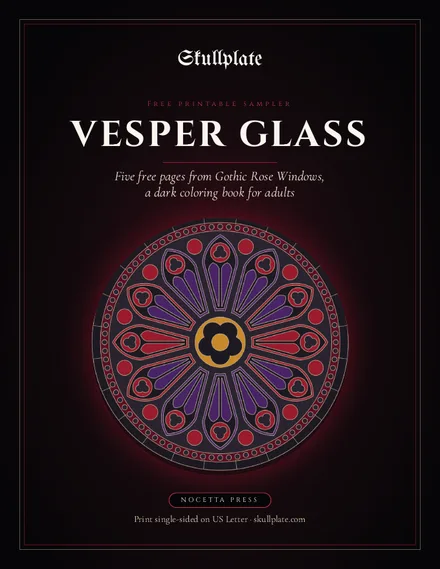
Skullplate makes dark coloring books for adults. Vesper Glass: Gothic Rose Windows has 48 original cathedral window designs, available now as a $5.99 print-at-home PDF, with the paperback coming soon to Amazon. Catacomb Roses, a sugar-skull book with ravens, moths and roses, is next. The free sampler gets you five printable pages by email.
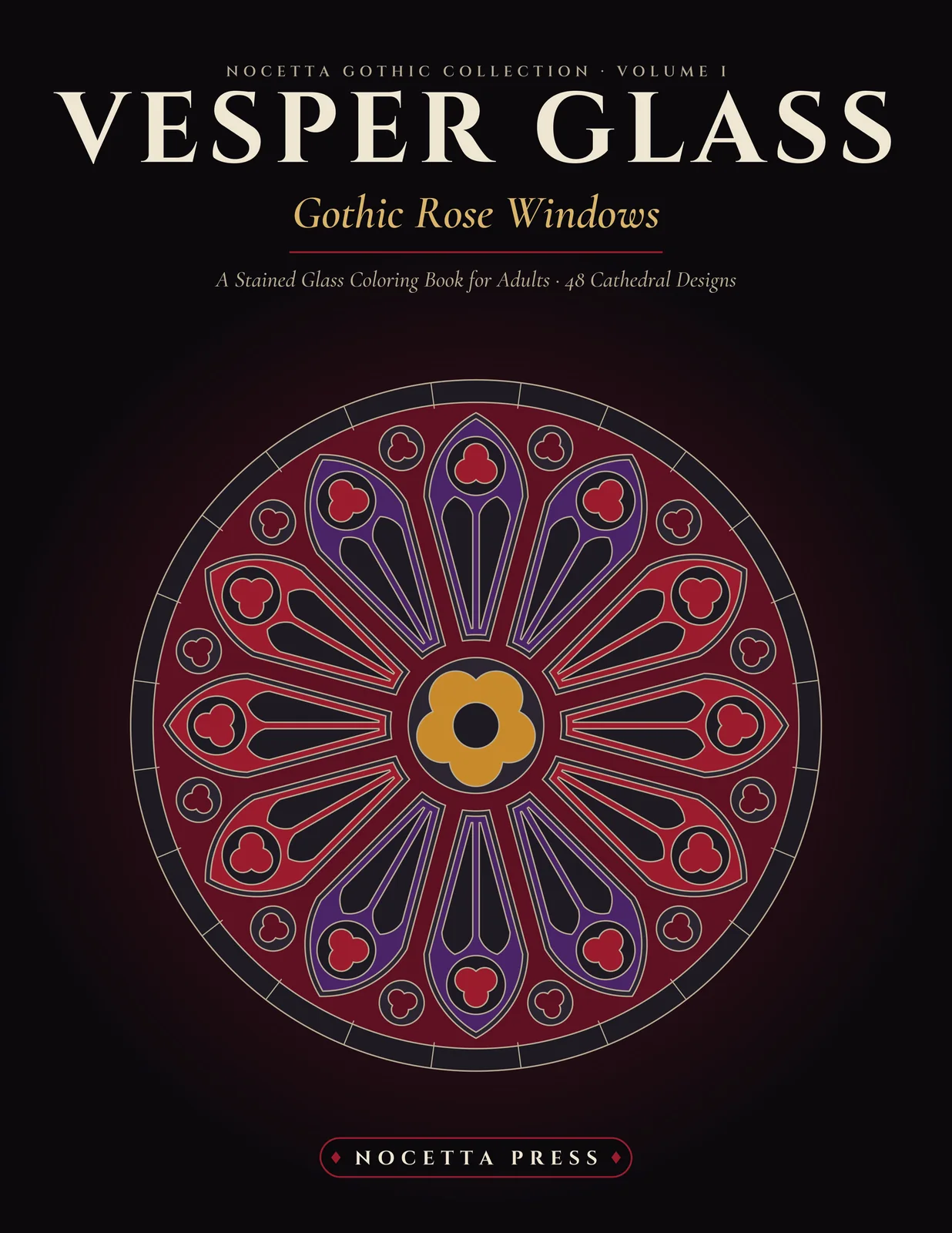
Vesper Glass: Gothic Rose Windows
48 cathedral window designs. $5.99 printable now; paperback coming soon to Amazon.
See the book